
Dumpster Rental Questions and Answers
Most folks don't rent a dumpster every day, so questions are normal, and we're glad to answer them. Below are straight answers to what people actually ask us, from what it costs to what you can throw in it.
Still stuck? Call your local Griffin Waste owner. A real person who knows your town picks up, not a call center three states away.

Pricing and Rental Terms
How much does it cost to rent a dumpster?
One flat price, told to you upfront, with no junk fees tacked on at the end. No surprise "environmental surcharge," no fuel-fee shuffle. Your exact number depends on where you are and what you're tossing, so call your local owner and you'll have a real quote in a couple of minutes.
How long can I keep the dumpster?
Plan on several days, usually 3 to 7. If your project runs long, just tell us. We would rather leave the bin with you than make you rush the job. Your local owner can sort out extra time.
Can I get same-day dumpster delivery?
A lot of the time, yes. Call in the morning and there's a good chance it's in your driveway that afternoon. It comes down to the day's route, so ask when you book and we'll tell you straight.
Do I need a permit to rent a dumpster?
If it sits on your own driveway or yard, almost never. If it has to go on a public street, your city may want a permit. Your local owner has worked in your area before and can point you the right way.
Do I need to be home for delivery or pickup?
Nope. Just tell us where to set it and make sure the spot is clear. Plenty of customers are at work when we drop off and pick up.
What You Can Put in the Dumpster
What can I put in a dumpster?
Most of what a home project throws at you:
- Household junk and clutter
- Old furniture and mattresses
- Renovation and construction debris
- Yard waste and brush
- Roofing shingles
- Flooring, drywall, and lumber
- Appliances (minus the ones with refrigerant)
What can't go in it?
A short "please keep out" list, mostly for safety and the law:
- Paint, chemicals, and fuel
- Batteries
- Tires
- Asbestos
- Medical waste
- Fridges or AC units that still have refrigerant
Rules shift a little by town, so if you're eyeing something borderline, just ask your local owner first.
Can I throw concrete, brick, or heavy debris in it?
Often yes, but heavy stuff like concrete and brick hits the weight limit long before the bin looks full. Tell your local owner what you're loading and we'll set you up so an overage charge doesn't catch you off guard.
Can I put yard waste and landscaping debris in it?
Absolutely. Branches, brush, grass, soil, the leftovers from a weekend in the yard, all fine.
Can I throw away food waste?
A little from a kitchen cleanout is fine. Skip dumping large amounts, though. It turns smelly and invites critters before pickup day.
Can I fill the dumpster all the way to the top?
Load it level with the top rail and you're golden. We can't legally haul a bin that's mounded over, so keeping it level keeps your pickup on schedule.
How do I get rid of items that can't go in the dumpster?
Hazardous things like paint, chemicals, and batteries go to a designated drop-off site. Your city's waste department keeps a list, and your local owner can usually point you to the closest one.
Placement and Your Property
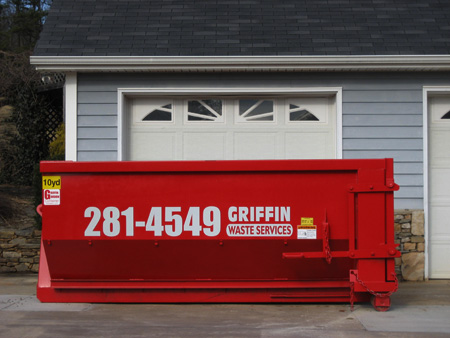
Where the dumpster goes is your call. Our trucks are smaller and easy to maneuver, so we can tuck the bin into spots the big rigs simply can't reach, and the low profile is easier on your driveway.
Where can the dumpster be placed?
Driveway, side yard, job site, wherever's handy for you. Tell us the spot you want and that's where it goes. If access is tight, mention it and we'll plan the approach.
Will the dumpster fit in my driveway?
Yes. The 10-yard is built to sit in a normal driveway, and it will even fit in most garages, so you're not surrendering the whole front of your house for a week.
Will a dumpster damage my driveway?
We're careful, and being right-sized helps a lot. A 10-yard on a smaller truck is far gentler on concrete than a giant roll-off. Mention your surface when you book and we'll place it with that in mind.
What Size You Need (Why a 10-Yard)
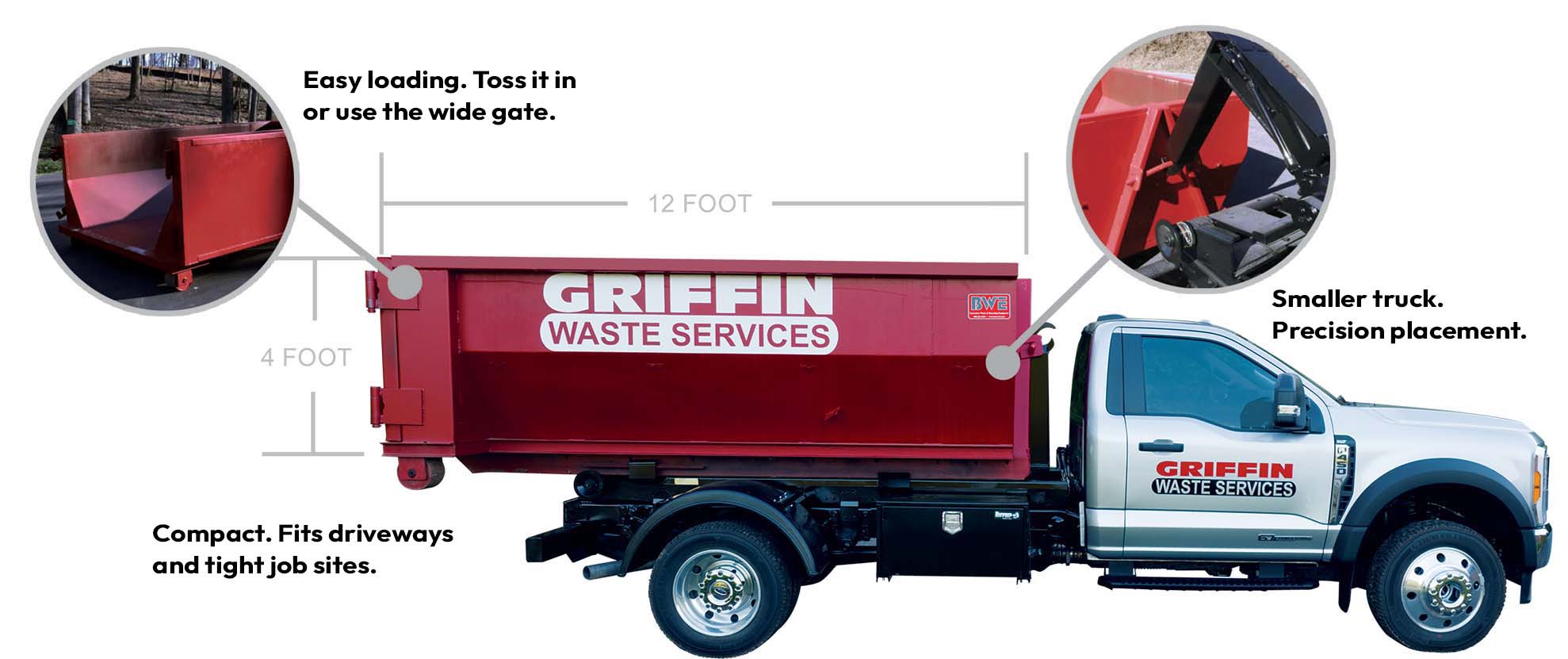
We run one size on purpose: a 10-yard roll-off. It's the right tool for the vast majority of home and small construction jobs, it fits where bigger bins can't, and you never pay for empty space you won't use.
What size dumpster do I need?
For almost every home and small construction job, a 10-yard does it, roughly 4 to 5 pickup-truck loads. It's the size we specialize in, so it's all we run and we've got it dialed in.
Why does Griffin only offer a 10-yard?
Because it's the right fit for most jobs and it goes where the big bins can't. You skip paying for empty space, and it slides into driveways and tight lots without taking over your week.
Aren't bigger dumpsters better?
Usually not, for a home project. Bigger means more money (even half-empty), harder placement, taller walls to heave debris over, and a better chance of blocking your driveway or scarring the concrete. The 10-yard skips all of that.
Is the dumpster easy to load?
Really easy. The extra-wide swing gate and low 4-foot walls let you walk debris in from the side instead of hoisting it over the top. Your back will thank you.
Projects and After Pickup
Is a dumpster good for spring cleaning and cleanouts?
Perfect for it. Garage, attic, basement, the whole "how did we keep all this" pile, one bin and it's gone.
Can I use a dumpster for a roofing project?
Yep. A 10-yard handles a typical residential tear-off, shingles, felt, nails, and all.
What happens to the waste after it's picked up?
It heads to the landfill or a recycling facility, and we divert what we reasonably can. Less in the ground is better for everybody.
Still Have a Question?
Get a real answer (and a flat-rate quote) from the local owner in your area. No call center, no middleman.
Find Your Dumpster